
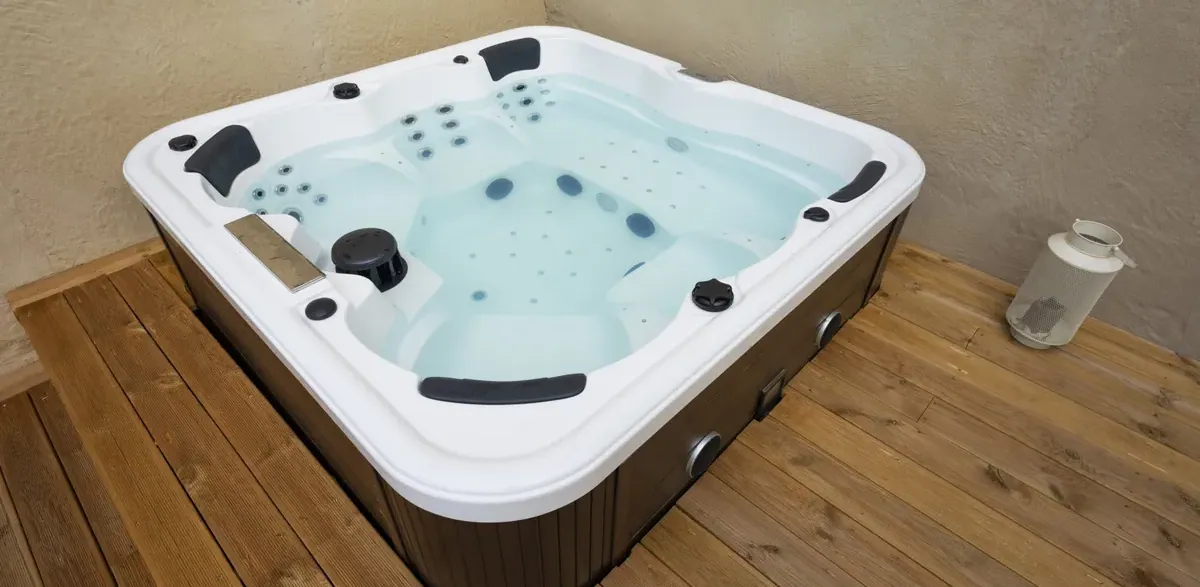
When you're getting rid of a hot tub, that 240-volt circuit doesn't just unplug. It needs to be properly disconnected, terminated, and documented so your panel stays clean and everything is up to code for whatever you do with the space next.
What's Behind a Hot Tub Electrically
A hot tub runs on a dedicated 240-volt, 50-amp circuit with a GFCI breaker, a disconnect box near the spa, and wiring that usually runs underground through conduit. That's a lot more than a standard outlet, and it all needs to be handled correctly during removal.
Why You Shouldn't DIY This
240 Volts Is No Joke
A 50-amp, 240-volt circuit can kill you. Before anyone touches a wire, the breaker has to be fully off, the disconnect locked out, and every connection verified dead with a meter. This isn't a step you want to skip or guess at.
Your Panel Needs to Stay Clean
The circuit that fed your hot tub needs to be properly terminated or removed to code. That keeps your panel organized and ready for the next project, whether that's a patio outlet, a fire pit circuit, or something else.
What We Usually Find
Corroded Underground Conduit
Underground conduits take a beating from moisture and soil. After years of use, corrosion and water intrusion can make them a safety hazard even after the hot tub is gone.
Chemical Damage to Connections
Spa chemicals and humidity eat away at wiring, connectors, and junction boxes over time. We often find corroded connections and degraded insulation that need to be addressed during removal.
How We Handle It
- De-energize at the panel. Turn off the dedicated GFCI breaker at the main electrical panel and apply lockout devices to prevent accidental re-energization.
- Lock out the disconnect switch. Shut off the disconnect switch at the spa panel and lock it in the off position with proper lockout and tagout devices.
- Verify power is off. Use professional voltage testing equipment to confirm there is no electrical current at all connection points before touching any wires.
- Disconnect at the hot tub. Remove the hot tub's electrical access panel and safely disconnect all supply conductors and grounding connections.
- Address underground conduit. Inspect and remove corroded underground conduit sections that could become safety hazards from years of moisture and chemical exposure.
- Complete the panel work. Remove supply conductors from the GFCI breaker, properly terminate all wires according to code, and document the work for future reference.
What You Get Out of It
Your wiring stays intact, all connections are capped to code, and everything's documented. That means no confusion for the next electrician who opens your panel, and no surprises when you decide what to do with the space.
Planning to pull out a hot tub or spa? Reach out to Peach Electric for a free, upfront estimate.